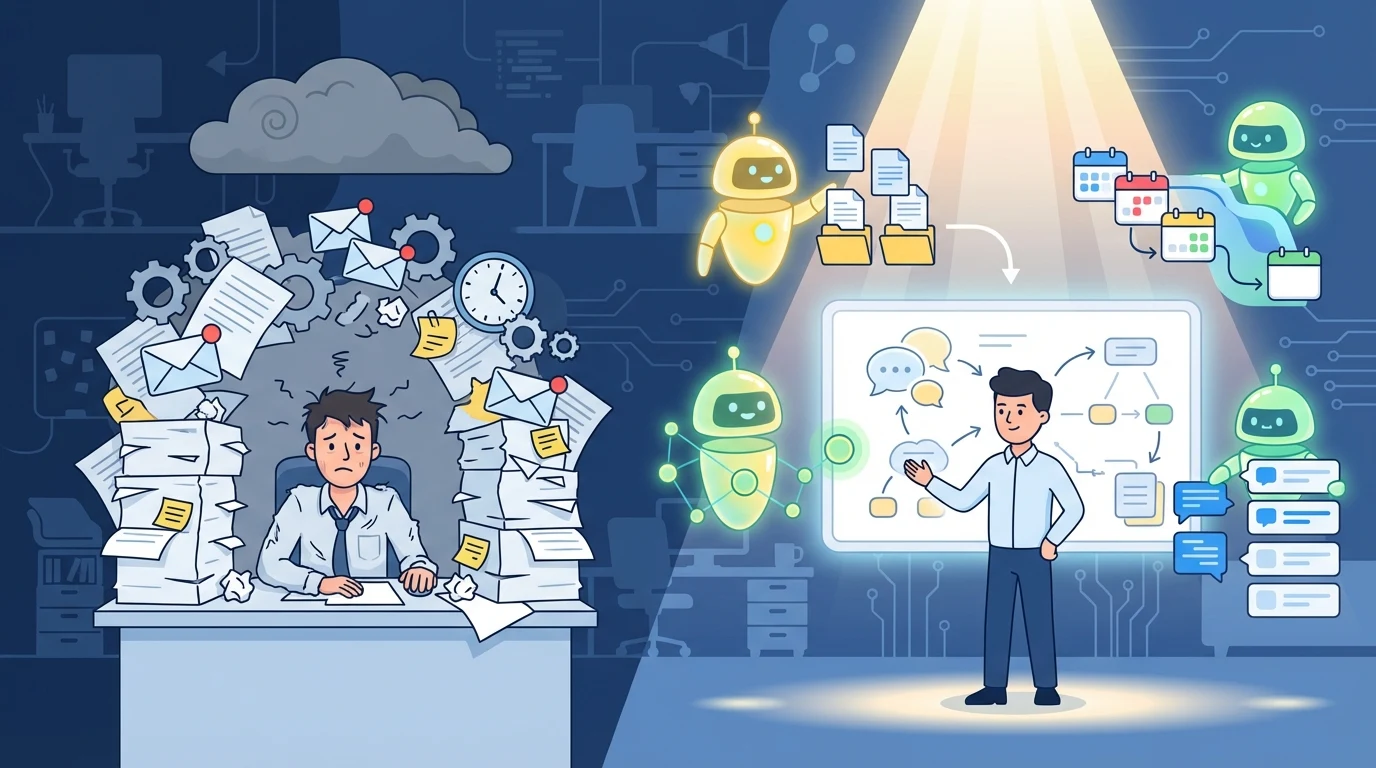
Handle a few emails in the morning, and suddenly it's lunchtime. Clean up meeting minutes, and quitting time is already in sight. The truly important, decision-making tasks only begin then. It's not a lack of willingness to work harder; repetitive chores are simply draining your day before it even begins.
What many people are looking for isn't how to work more, but how to leverage AI to minimize wasted effort and focus on tasks that demand critical judgment.
By 2026, AI is evolving beyond a simple question-answering tool. The AI News projected 2026 as the dawn of 'AI agents' – systems that understand objectives, break down tasks into multiple steps, and perform work semi-autonomously. This shift makes "Should I use AI?" less relevant than "What parts of my work can I entrust to AI?"
Why AI Productivity Gains Are Becoming Tangible
The biggest change is that AI has begun directly tackling repetitive tasks that consume the most time. Document creation, email drafting, brainstorming, summarizing lengthy materials, and report writing are all areas where AI can intervene most rapidly.
This shift isn't just a trend for early adopters; the numbers in the marketing industry offer a clear indication. One survey found that by 2025, 88% of marketers used AI in their daily tasks, with 93% identifying it as a crucial tool for accelerating content creation. While industry-specific variations exist, the overall trajectory — AI impacting practical work speed — is undeniable.
The core isn't to work more, but to reclaim time for critical judgment and creative tasks that only humans can truly excel at. This naturally leads to the question: What in my day can I entrust to AI first?
The First Thing to Cut: Mindlessly Wasted Time
In practice, the biggest time sinks aren't usually large, complex projects. They're the small, frequently repetitive tasks: the blank page paralysis of starting a document without a draft, tidying up lengthy email threads, reorganizing notes after a meeting, or sifting through multiple sources to extract key information. In these areas, generative AI offers immediate assistance.
The important thing isn't to expect AI to complete the final product, but to view it as a tool that accelerates your starting speed. If you can quickly generate a draft, you free up energy for refinement and critical judgment. That's where true productivity gains begin.
The Difference Multiplies When Connected to Your Workflow
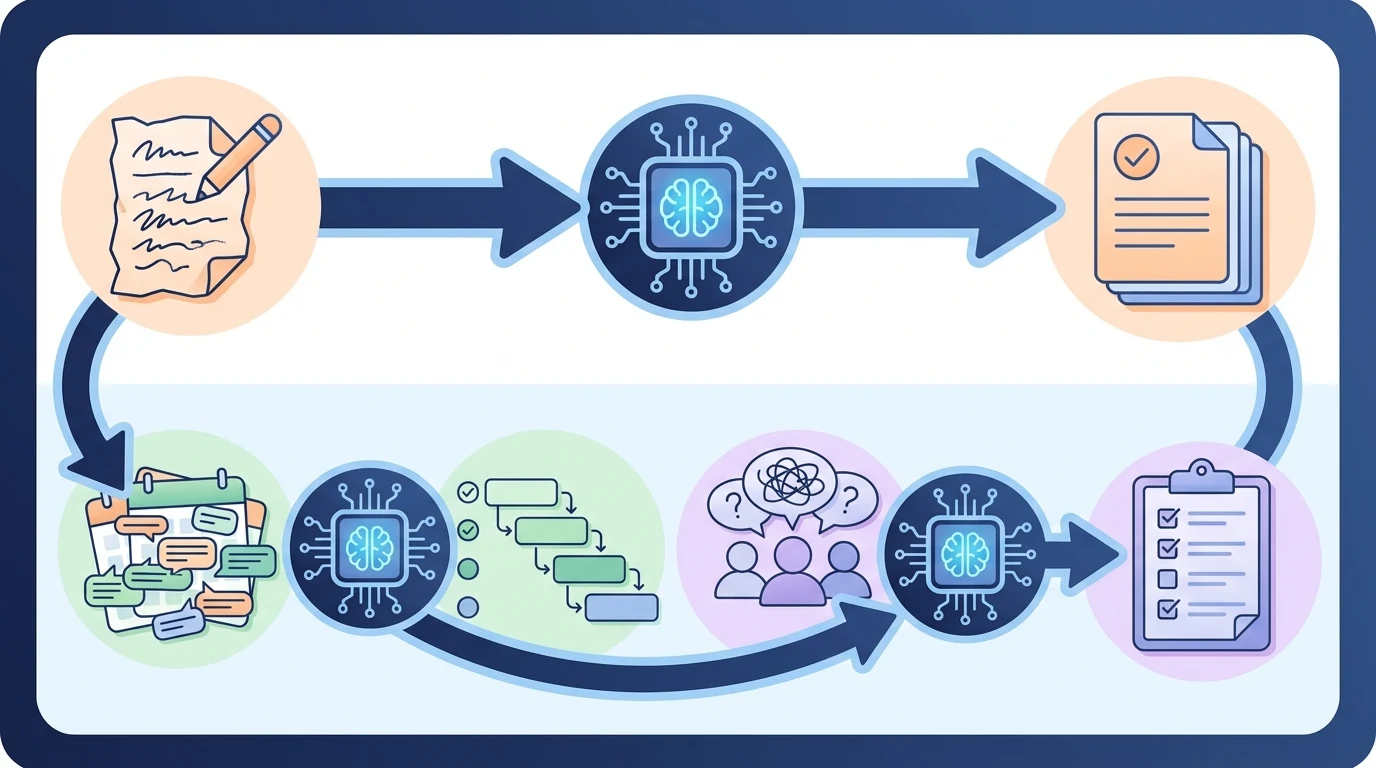
Those who effectively leverage AI don't stop at simply asking a few good questions. They integrate their to-do lists, calendars, meetings, and follow-up tasks into a unified workflow.
Tools like Motion analyze your to-do list and calendar to automatically re-arrange your daily schedule. Platforms such as ClickUp, which embed AI into workflow management, dynamically adjust tasks based on priority and availability. When you establish a system where meeting notes are automatically organized, the summarized content transitions seamlessly into your next tasks, and priorities are reflected in your schedule, you can operate with less fatigue and greater precision.
Ultimately, AI-driven productivity isn't just about 'getting good answers'; it's about 'creating a smoother, less interrupted workflow.' This is precisely why your choice of tools should prioritize their ability to address your common bottlenecks, rather than just focusing on individual features.
Which AI Tools Fit Which Needs in 2026
Categorizing frequently recommended productivity tools by their primary use cases helps clarify the landscape.
- For Drafting and Summarizing, generative AIs like ChatGPT and Claude are ideal. They help you quickly overcome bottlenecks when starting or organizing tasks, such as generating document drafts, brainstorming ideas, or summarizing lengthy content. This is often where you'll experience the most immediate productivity boost when work feels stalled.
- For Scheduling and Workflow, tools like Motion or ClickUp Brain offer a distinct advantage. Their impact is most noticeable when you know what needs doing but constantly run out of time, or when the cost of switching between tasks is high.
- For Meetings and Collaboration, AI meeting assistants like Granola or Otter.ai are invaluable. By automatically taking notes and summarizing discussions during meetings, they eliminate the post-meeting scramble to remember "Who was assigned what?"
Instead of trying to adopt multiple tools simultaneously, it's more practical to first address a single, frequent bottleneck in your daily routine. However, there's a crucial point that's easy to overlook if you only focus on efficiency as you scale.
What to Pay More Attention to as Things Speed Up
While AI saves time, it doesn't absolve you of the responsibility for review. Generative AI can produce plausible-sounding content that is factually incorrect, so human verification is absolutely essential before incorporating it into externally shared documents or reports.
Important Note: While AI excels at drafting and organization, fact-checking and final judgment remain human responsibilities. Before inputting company documents, customer data, or sensitive personal information into public generative AI tools, always verify your internal policies and security standards.
Effective AI users aren't those who delegate the most, but those who clearly define the boundaries of what to entrust to AI.
The Most Realistic Start: Personal Automation
There's no need to aim for company-wide implementation or a grand system overhaul from day one. It's far quicker to validate the effects at an individual level.
- List three tasks you repeat daily.
- Choose one that is the most boring and frequent.
- Categorize it as close to drafting, summarizing, schedule organizing, or meeting organizing.
- Attach just one AI tool suitable for that role and use it for about two weeks.
- Instead of focusing solely on saved time, first observe if you "experience fewer interruptions and procrastinate less."
Productivity is often felt before it's measured. When the dread of starting documents diminishes, post-meeting organization accelerates, and your daily priorities feel less chaotic, that's when AI transforms from a buzzword into an indispensable work habit.
AI-driven productivity in 2026 isn't about magical auto-completion. It's a transformative shift that reduces repetitive tasks and reclaims time to focus on critical, judgment-based work. What's truly needed now isn't mastering every new app, but identifying a single, frequent time leak in your day. By addressing just that one point, you can change your entire working experience, not just your speed.