Why Korean Street Food Pulls You In Fast
You step into a Seoul market hungry, a little overwhelmed, and not totally sure which stall is worth your first bite. One cart is sending up clouds of steam, another is frying something golden, and someone next to you is eating fish cake off a skewer as if they've done it every day of their life. If you've ever wondered where to start, what to order, and how to avoid wasting your appetite on the wrong thing, this Korean street food guide is for you.
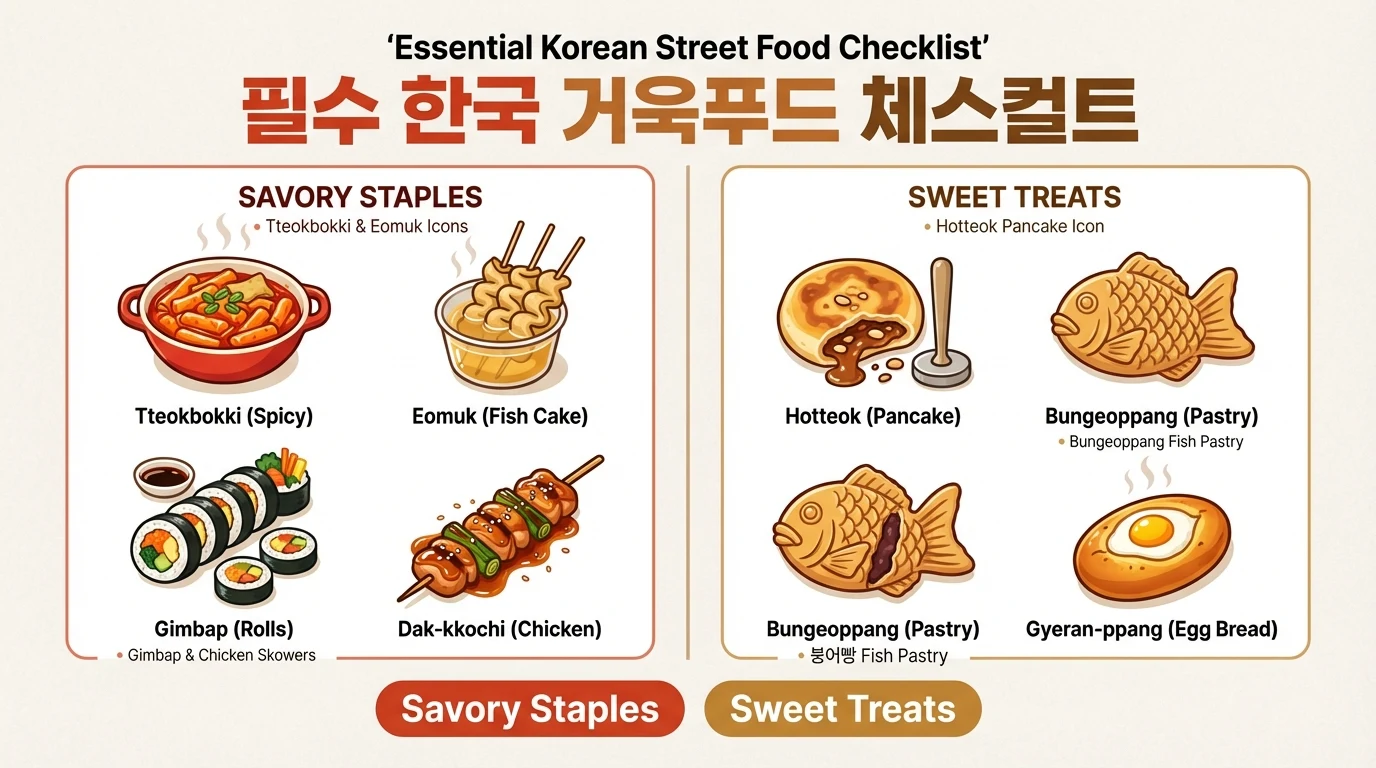
Korean street food is far more varied than many first-time visitors expect. According to Koryo Tours, some of the best-known staples include tteokbokki, eomuk, gimbap, hotteok, sundae, dak-kkochi, and bungeoppang — which already tells you how wide the range is, from spicy rice cakes to sweet filled pastries. Skyscanner also points to Myeongdong, Hongdae, Itaewon, Gwangjang Market, and Namdaemun as some of the most popular Seoul street food spots, which is useful when you are trying to match your cravings with an actual neighborhood.
What makes street food in Korea more interesting than a simple snack run is its cultural weight. My Guide Seoul notes that modern street food culture grew in the years after the Korean War, when markets needed cheap, fast, filling food for ordinary people. That history still matters today: these dishes are quick and casual, but they also reflect how Koreans eat, gather, and move through the city. And as The Fact reported in 2024, global K-pop and K-drama interest has helped turn Korean street food into a major part of the travel experience for international visitors.
That means you are not just eating between sightseeing stops. You are stepping into one of the most accessible ways to understand everyday Korea, and the next step is knowing what is actually worth trying first.
The Must-Try Korean Street Foods
Tteokbokki: the spicy classic everyone notices first
Tteokbokki (떡볶이, chewy rice cakes in a spicy-sweet red sauce) is usually the dish that grabs your attention before you even know its name. The sauce is commonly built around gochujang (고추장, fermented red chili paste), and the rice cakes have that signature bounce that can surprise first-timers who are expecting something soft and pillowy.
This is one of the best Korean street food choices if you want something unmistakably Korean in flavor. It is warming, a little messy, and often richer than it looks. Some stalls add fish cake, boiled egg, cabbage, or ramen noodles, which turns it from a snack into a small meal.
If you are spice-sensitive, ask for a small portion first or share it. Some versions lean sweet and mild; others hit harder than tourists expect. Tteokbokki is also a good gateway dish because it pairs naturally with fried snacks, which is where many people go next.
Eomuk: simple, savory, and ideal on a cold day
Eomuk (어묵, fish cake served on skewers, often in a light broth) looks modest, but it is one of the most comforting things you can eat on a Korean street. The texture is springy, the broth is usually salty and clean, and the whole experience feels built for winter evenings.
Many stalls serve eomuk from steaming metal containers, and locals often drink a small cup of the broth alongside it. That broth is part of the appeal, especially when you are walking for hours through markets or shopping districts.
If you want a low-risk first try, eomuk is a smart order. It is less spicy than tteokbokki, easy to eat standing up, and usually one of the more affordable options. Once you get used to that rhythm of skewer, sip, and move on, the rest of Korean street food starts to feel more approachable.
Gimbap: the portable staple that works any time
Gimbap (김밥, rice and fillings rolled in seaweed) is sometimes compared to sushi by visitors, but it is better to think of it as its own category. The rice is usually seasoned differently, the fillings often include egg, pickled radish, carrots, ham, tuna, or vegetables, and the role of gimbap is more everyday convenience than special-occasion delicacy.
Street and market versions are great when you want something filling without a heavy sauce. It is easy to carry, easy to share, and useful if you are building a food crawl and do not want every stop to be deep-fried or spicy.
In some markets, you will also find mini gimbap sold in small portions, which makes it a practical choice if you want to sample more dishes in one outing. That matters, because the best street food in Korea is usually not one big meal but several smaller bites over a couple of hours.
Twigim: the fried sidekick that often steals the show
Twigim (튀김, battered and fried vegetables, seafood, or dumplings) often sits next to tteokbokki for a reason. Vendors fry sweet potato, squid, seaweed rolls, peppers, dumplings, and assorted vegetables until crisp, then customers dip them into tteokbokki sauce for extra flavor.
This is one of those street foods that looks familiar but tastes better in context. Fresh twigim is crunchy, savory, and slightly addictive, especially when eaten immediately. If a stall has a steady line and the tray is turning over fast, that is usually a good sign.
Try ordering a mix rather than just one piece. It gives you a better sense of the stall, and it turns a simple snack into a proper market ritual. Once you start combining dishes instead of ordering them in isolation, you get closer to how locals actually eat them.
Sundae: for adventurous eaters who want something traditional
Sundae (순대, Korean blood sausage filled with noodles and seasonings) is one of the most misunderstood foods among first-time visitors. If the name makes you hesitate, that is normal. But the taste is usually milder than people expect, and the texture is what stands out most.
It is typically sliced and served with salt or a seasoned dip, sometimes with liver or other cuts on the side depending on the stall. The casing gives it structure, while the inside is soft and savory.
This is not everyone's first choice, but it is definitely a must-try Korean street food if you want a fuller picture of market eating in Korea. A good strategy is to order a small portion in a busy market rather than committing to a large plate. That way you can try it with curiosity, not pressure.
Dak-kkochi: the easy crowd-pleaser
Dak-kkochi (닭꼬치, grilled chicken skewers) is one of the safest bets if you are traveling with picky eaters or friends who want something familiar. The chicken is usually grilled and brushed with a sweet, spicy, or soy-based glaze, then finished over heat so the edges caramelize.
It is convenient, portable, and easy to understand on the first bite. You do not need much cultural context to enjoy juicy grilled chicken on a skewer. At the same time, the Korean sauces make it feel distinct enough to count as a real local snack rather than a compromise order.
If you are doing a Seoul street food crawl with a group, dak-kkochi is often the dish that resets everyone's appetite between stronger flavors. After something spicy or rich, a skewer of grilled chicken brings balance.
Sweet Street Food You Should Not Skip
Hotteok: the winter favorite worth waiting for
Hotteok (호떡, a filled pancake usually stuffed with brown sugar, cinnamon, and nuts or seeds) is one of the most satisfying sweet snacks in Korea. The outside is crisp from the griddle, the inside turns syrupy and hot, and the first bite can absolutely burn your mouth if you rush it.
There are savory versions around, but the sweet one is the classic. On cold days, it is hard to beat. This is the snack many travelers remember long after the trip because the texture contrast is so memorable: crisp surface, chewy dough, molten center.
If you see a line at a hotteok stall, it is usually a good sign. Freshness matters here. Hotteok is at its best when it comes straight off the griddle and into your hands.
Bungeoppang: charming, familiar, and better than it sounds
Bungeoppang (붕어빵, fish-shaped pastry usually filled with sweet red bean paste) is one of the easiest authentic Korean snacks to love. The fish shape catches your eye first, but the appeal is really the contrast between the lightly crisp outside and the warm filling inside.
The classic filling is red bean paste, which some travelers avoid until they try it once and realize it is earthy, smooth, and not overly sweet. Some stalls also offer cream or other fillings, but the red bean version is the one most associated with the classic experience.
Bungeoppang is especially common in cooler months, so you may not find it year-round at every market. When you do, it is a strong choice for a lighter dessert between savory stops.
Gyeran-ppang: a quick breakfast-style street bite
Gyeran-ppang (계란빵, egg bread) is exactly what it sounds like: a small loaf-shaped bread with an egg baked into it. It leans more savory than sweet, but it often gets grouped with sweet snacks because the bread base is slightly sweet.
This is a great choice if you want something simple in the morning or need a snack that is less intense than chili sauce, fried batter, or organ meats. It is soft, warm, and surprisingly comforting.
For travelers who want to ease into street food without starting with the boldest flavors, gyeran-ppang is the gentle entry point that makes the rest of the food scene feel less intimidating.
Now that you know what to eat, the next practical question is where to find these dishes without wandering aimlessly.
Where to Find the Best Street Food in Seoul
Myeongdong: easiest for first-timers
If you are new to Seoul street food spots, Myeongdong is the easiest place to begin. It is central, busy, tourist-friendly, and dense with stalls. You can try multiple dishes in a short walk, and the visual layout makes it easier to compare options before ordering.
Because it is so popular, prices may run a little higher than in more local-feeling areas, and some stalls lean toward trendy items as much as traditional ones. Even so, the convenience is hard to beat for a first night in Seoul.
Myeongdong works best if you want variety and low friction. You may not have the most local experience of your trip there, but you will probably have one of the easiest.
Gwangjang Market: the market atmosphere people imagine
Gwangjang Market (광장시장) is where many visitors go when they want the market energy that shows up in travel videos and food documentaries. It feels more rooted in old Seoul, and it is a strong place to try classic dishes in a dense, lively setting.
This is also where the social side of eating becomes more obvious. You are not just buying food and moving on; you are sitting close to other diners, watching vendors work quickly, and absorbing the pace of the place.
If you want a street food experience that feels more historic and less shopping-district polished, start here. It gives you a better sense of how market food and daily life connect.
Namdaemun Market: broad choice and old-school appeal
Namdaemun Market (남대문시장) is another classic option, especially if you like the idea of pairing food with market browsing. The area has long-standing commercial energy, and food here feels tied to that older market culture.
It is a good place to slow down, snack in stages, and notice how many foods are built for mobility: skewers, rolls, fried bites, small bowls. That practicality is part of the identity of Korean street food.
If Myeongdong feels polished and Gwangjang feels famous, Namdaemun often feels more workaday — which can be part of its charm.
Hongdae: youthful, casual, and good for evening snacking
Hongdae (홍대) has a younger, more nightlife-adjacent energy. You will find street snacks around shopping streets and performance areas, especially later in the day when the neighborhood gets busier.
The food scene here mixes traditional staples with trend-driven snacks, so it is a good area if your group wants both classic market food and newer Korean street food favorites. It also works well if you are pairing snacks with an evening out rather than making food the entire agenda.
For many visitors, Hongdae is where Korean street food starts to feel less like a checklist and more like part of a night in the city.
Itaewon: more mixed, less traditional, still useful
Skyscanner includes Itaewon among the neighborhoods known for street food, but it is not the place to send someone looking for a traditional first experience. Itaewon is more international in feel, which can be a plus if you are traveling with people who want variety beyond classic market fare.
Think of it as a flexible option rather than the purest one. If you are already in the area, snack there. If your main goal is authentic street food in Korea, start with Myeongdong, Gwangjang, or Namdaemun and treat Itaewon as a secondary stop.
Practical Korean Street Food Tips
Street food in Korea is usually straightforward, but a few habits make the experience smoother.
Carry some cash. Koryo Tours notes that some vendors may not take cards easily, and while card acceptance is more common than it used to be, smaller stalls can still be cash-first. Having small bills helps.
Watch for turnover. If trays are being refilled often and locals are ordering steadily, that usually means fresher food. This is one of the simplest ways to reduce disappointment.
Check visible cleanliness without panicking. Use practical judgment: look at the cooking area, ingredient handling, and how food is stored. You do not need perfection; you do want basic order and freshness.
Ask about ingredients if you have allergies. Street vendors may not always have detailed ingredient information in English. Learn a couple of simple phrases such as "What is inside?" and "Does this contain peanuts?" If your allergy is serious, it is smarter to be cautious than adventurous.
Compare prices before ordering in very touristy areas. Not every stall overcharges, but price differences do happen. A quick glance at nearby menus can save annoyance.
Go hungry, but not starving. The best way to enjoy must-try Korean street food is to pace yourself. Order one or two items, walk, then eat again. If you arrive ravenous, you are more likely to over-order the first thing you see.
These small choices make a big difference, and once they are in place, planning your first food crawl becomes easy.
How to Plan a Great First Street Food Crawl
If this is your first proper street food night in Seoul, keep it simple. Pick one neighborhood, not three. Start with something comforting such as eomuk or gimbap, move into something iconic like tteokbokki and twigim, then finish with hotteok or bungeoppang if you can still eat.
A smart first route is Myeongdong for convenience or Gwangjang Market for atmosphere. Go in the late afternoon or evening, bring cash, share dishes, and leave room for one item you did not plan to order. That last spontaneous choice is often the one people remember.
The point of a Korean street food guide is not to turn eating into homework. It is to help you recognize what is in front of you, order with more confidence, and enjoy the experience like a traveler who is curious rather than rushed.
Korean street food works because it is immediate. You smell it before you see it, you eat it while standing or walking, and you remember it through texture as much as taste: chewy rice cakes, steaming broth, syrupy pancakes, crisp batter, warm bean-filled pastry. If you want one of the most direct, affordable, and genuinely local ways to understand Korea, start at a stall, point to something hot, and take the first bite.