Living in Korea on a Budget: 2026 Essential Saving Tips
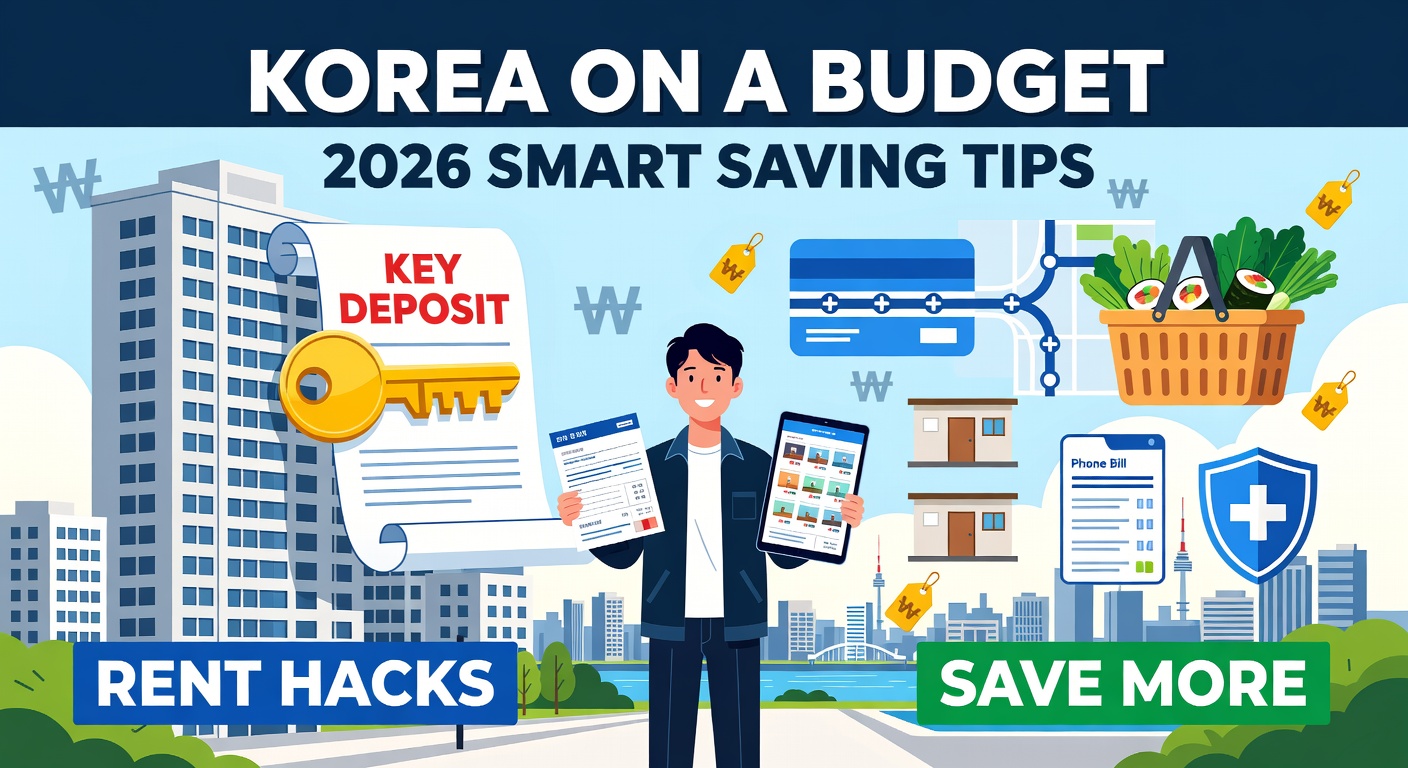
You just got your first Korean paycheck — or maybe you're staring at apartment listings wondering how anyone affords Seoul on a teaching salary. The numbers feel contradictory: street food is cheap, but rent deposits run into tens of thousands of dollars. Korea's essential living costs sit well above the OECD average, according to the Bank of Korea, with food prices indexed at 151 and clothing at 161 against a baseline of 100. That gap between "Korea is affordable" and your actual bank balance is real, and it catches most newcomers off guard.
This article breaks down exactly where your money goes in Korea in 2026 — housing, transport, food, insurance — and walks through the specific systems, cards, and strategies that can cut each category. By the end, you'll know which rental type fits your situation, how to lock in flat-rate transport costs, and where the hidden budget traps actually are.
How Much Does It Actually Cost to Live in Korea in 2026?
The short answer depends almost entirely on where you live and how you handle housing. But here are the baseline numbers that anchor everything else.
Korea's 2026 minimum wage is 10,320 won per hour, which works out to roughly 2,156,880 won per month based on a standard 209-hour calculation. That's the number the Minimum Wage Council published, and it represents a 2.9% bump from the 2025 rate of 10,030 won. For context, living on minimum wage in Seoul as a single person is tight — not impossible, but tight.
🔗 Minimum Wage Council — Official Rates
What many people find confusing is that Korea's consumer price index (CPI) only rose 1.7% year-on-year as of the latest Statistics Korea data — so inflation sounds mild. But the Bank of Korea pointed out in a June 2025 report that essential living costs (food, housing, clothing) run significantly above OECD averages. The CPI number and your grocery bill tell very different stories.
The takeaway: Korea is not a cheap country by OECD standards. Budget living here is less about finding bargains and more about understanding which systems — rental structures, transit passes, insurance enrollment — you can use to keep fixed costs predictable.
Housing: The Biggest Line Item (and Where Most Budgets Break)
Housing will consume 30–50% of your monthly spending in Seoul. Outside of Seoul, costs drop sharply, but most expats end up in the capital region, so that's where the pressure sits.
Understanding Jeonse vs. Wolse
Korea's rental system is unlike anything most foreigners have encountered. There are two main options, and picking the wrong one for your situation is the single most expensive mistake you can make.
Jeonse (전세) is a large lump-sum deposit — often tens of millions of won — that you hand to the landlord for the duration of your lease. In return, you pay zero monthly rent. The landlord invests your deposit and keeps the returns. You get the full deposit back when you move out.
Wolse (월세) is closer to what most countries call rent: a smaller deposit plus monthly payments. It's more accessible for newcomers, but the monthly costs add up over a multi-year stay.
Here's what trips people up: many assume jeonse is "free housing" and wolse is "expensive." The real comparison requires looking at the opportunity cost of tying up that deposit money, the risk of not getting it back if a landlord defaults, and how long you plan to stay. Seoul's rental market has been shifting heavily toward wolse in recent years — Chosun Biz reported that monthly rent transactions in Seoul apartments have now surpassed jeonse deals, and average monthly rents have crossed the 1 million won mark.
🔗 Seoul monthly rent market trends — Chosun Biz
Budget-Friendly Housing Options
If a standard apartment wolse feels out of reach, three alternatives deserve a serious look:
Goshiwon (고시원) — Small single rooms, often 3–5 pyeong (roughly 10–16 square meters), with shared bathrooms and sometimes shared kitchens. Monthly costs typically run ₩300,000–₩600,000 in Seoul with no deposit or a very small one. They're basic, but they get you housed fast with almost no upfront cash. The common complaint in reviews is noise and thin walls — check in person before signing.
Sharehouse / Co-living — A growing market in Seoul, especially in areas like Mapo, Gangnam, and near university districts. You get a private room with shared common spaces. Deposits are lower than standard wolse, and some include utilities. Monthly costs often land between ₩400,000–₩700,000.
Living outside Seoul — Cities like Incheon, Suwon, Daejeon, and Daegu offer significantly lower rents. If your work allows a commute or is remote, this alone can cut housing costs by 30–50%.
Seoul's 2026 city budget of 51.506 trillion won expanded public housing programs targeting young adults, newlyweds, and low-income households. But eligibility varies by program, income level, and household type — don't assume you qualify without checking the specific announcement for each program.
Transportation: Locking in a Flat Monthly Rate
Seoul's public transit is excellent, and getting around cheaply is one of the genuine advantages of living here. The key decision is whether to use a flat-rate transit pass or pay per ride.
The Climate Card (기후동행카드)
Seoul's Climate Card is an unlimited-ride transit pass covering subways and buses within the Seoul metropolitan area. As of early 2026, the standard 30-day pass costs around 62,000 won, with a youth discount bringing it closer to 55,000 won.
🔗 Climate Card — Transit Guide
If you commute daily, the math works out quickly. The Seoul subway base fare sits around 1,400 won for most routes as of early 2026 — so if you're taking two or more rides a day, the Climate Card pays for itself within about three weeks. For people who only ride a few times a week, a regular T-Money card with per-ride charges will be cheaper.
Where most people run into trouble is the coverage area. The Climate Card's exact scope — which bus routes, which subway lines, whether it includes transfers to Gyeonggi-do buses — varies by the specific product tier. Details shift between announcements, so check the official Seoul Metropolitan Government page before purchasing rather than relying on older blog posts.
| Transit Option | Monthly Cost (Approx.) | Best For |
|---|---|---|
| Climate Card (Standard) | ₩62,000 | Daily commuters in Seoul |
| Climate Card (Youth) | ~₩55,000 | Eligible young adults |
| T-Money (Pay per ride) | Varies | Occasional riders, short-term visitors |
| Bicycle (따릉이 Seoul Bike) | ₩5,000–₩30,000 | Short urban commutes, exercise |
Beyond the pass itself, living near a subway station (역세권) is a classic budget trade-off: you pay more rent for the convenience of walking to transit. Moving one or two stops further out — to a location reachable by bus — can shave ₩100,000–₩200,000 off monthly rent while adding only 10–15 minutes to your commute.
Food and Groceries: Eating Well Without Overspending
Food is the budget category with the most flexibility. You can eat for very little in Korea if you know where to look, but delivery apps and convenience-store habits add up fast.
Cooking at Home
Traditional markets (시장) remain the cheapest source for fresh produce, meat, and side dishes. Prices at places like Namdaemun Market or your local neighborhood market run noticeably lower than supermarkets for the same vegetables and proteins. The trade-off is less convenience — no standardized packaging, sometimes cash-only vendors, and you need to visit during operating hours.
For staples and bulk items, discount marts like Emart, Homeplus, and Lotte Mart offer competitive prices, especially during evening markdown hours when fresh items approaching their sell-by date get discounted. Online grocery platforms (Coupang, Market Kurly) are convenient but tend to cost slightly more per item unless you catch sales.
A realistic monthly grocery budget for one person cooking most meals at home in Seoul is roughly ₩250,000–₩400,000, depending on how much meat and imported products you buy.
Eating Out on a Budget
Korea still has affordable dining options that many countries have lost. Kimbap shops (김밥천국-style chains) serve full meals for ₩4,000–₩7,000. University neighborhoods (대학가) cluster cheap restaurants competing for student budgets. Many office districts offer lunch specials (점심특선) at ₩7,000–₩10,000 that include soup, rice, and several side dishes.
The budget trap most people fall into is delivery culture. Ordering through apps like Baedal Minjok or Coupang Eats adds delivery fees, service charges, and minimum order requirements that inflate the true cost of a meal. A ₩9,000 meal becomes ₩14,000 after fees. Cooking at home or walking to a nearby restaurant saves money almost every time.
Health Insurance: Not Optional, and Not as Expensive as You Think
If you're staying in Korea longer than six months, you'll almost certainly need to enroll in the National Health Insurance (NHI) system. This isn't a suggestion — it's a legal requirement for most visa types, and the National Health Insurance Service (NHIS) enforces it.
🔗 NHIS — Guidance for Foreigners
The common confusion point is who enrolls you and how much you pay. If you're employed, your employer handles enrollment and splits the premium with you — your share comes out of your paycheck automatically. If you're self-employed, a student, or on certain visa types, you enroll individually, and the premium is calculated based on income, property, and other factors. The amounts vary significantly depending on your situation.
What catches people off guard is that skipping NHI enrollment doesn't save money — it creates problems. Without NHI, a single hospital visit for something minor can cost ₩100,000+, and a serious issue could run into millions of won. NHI typically covers a substantial share of eligible medical costs — often cited around 60–70% depending on the treatment type and facility, per NHIS guidance. The monthly premium for most individual foreign enrollees is manageable relative to the coverage you get, though exact amounts depend on your declared income and visa category.
If you're on a short-term visa, working holiday, or certain other categories, the rules differ. Check directly with NHIS or your local community center (주민센터) rather than assuming the standard rule applies to you.
Hidden Costs and Common Budget Mistakes
Beyond the big four categories, several recurring costs quietly erode a budget:
Phone plans — Korea's three major carriers (SKT, KT, LG U+) charge premium prices. Budget MVNOs (알뜰폰) — virtual carriers that piggyback on the same towers as the big three — typically offer data-heavy plans for ₩15,000–₩30,000/month versus ₩50,000+ for comparable plans from SKT, KT, or LG U+. Compare current options on the MVNO portal (알뜰폰 허브) before switching, as offerings change frequently. Switching to an MVNO is one of the easiest monthly savings available.
Utility costs — Korean apartments typically require separate payments for electricity, gas, water, and building maintenance (관리비). The maintenance fee alone can run ₩50,000–₩150,000/month depending on the building. Many first-time renters in Korea overlook this because it's not included in the advertised rent.
Realtor commission (중개수수료) — Real estate agents (부동산) charge a transaction fee, typically in the range of 0.3–0.5% of the deal value, with exact caps set by local government ordinance and varying by transaction type. On a jeonse deposit of ₩100 million, that could run ₩300,000–₩500,000. Confirm the applicable rate before you sign.
Taxes — If you earn income in Korea, you're likely a tax resident. The year-end tax settlement (연말정산) process can result in either a refund or an additional payment. Understanding your deductions — rent payments, card usage, insurance premiums — directly affects how much you keep.
Free and Low-Cost Things to Do in Korea
Budget living doesn't mean staying indoors. Korea offers a surprising amount of free or near-free entertainment.
Public parks and mountain trails are everywhere — Bukhansan, Gwanaksan, and Cheonggyecheon Stream in Seoul alone could fill months of weekends. National museums are free, including the National Museum of Korea and the National Museum of Modern and Contemporary Art. Many palaces offer free admission on certain days or to those wearing hanbok.
Seoul's public library system is extensive, and most districts operate community centers (주민센터) with free or heavily subsidized classes in Korean language, cooking, fitness, and traditional crafts. University campuses often host free public lectures and cultural events.
For socializing, language exchange meetups (usually free), hiking clubs, and community volunteer groups are widespread and cost nothing beyond transport to get there.
Conclusion
Living affordably in Korea comes down to four decisions: where and how you rent, whether you lock in a transit pass, how you handle food, and confirming your insurance setup. The minimum wage of 10,320 won per hour gives you a floor to plan around, and Korea's public systems — transit cards, NHI, traditional markets — provide genuine tools to keep costs down.
Start by setting your housing budget as a hard ceiling, then work backward through transport, food, and insurance. Check official sources for the specific programs and rates that apply to your visa type and location. The numbers shift by district and by season, but the structure doesn't — and once you understand the structure, the budget follows.
Frequently Asked Questions
Q. How much money do I need per month to live in Seoul on a budget?
A realistic bare-minimum budget for a single person in Seoul runs roughly ₩1,200,000–₩1,800,000 per month, covering a goshiwon or sharehouse, basic food, transit, phone, and insurance. This assumes minimal dining out and no car. Comfort increases quickly at the ₩2,000,000+ level, where you can afford a small studio wolse and more flexibility with food.
Q. Is jeonse or wolse better for foreigners on a budget?
For most budget-conscious foreigners, wolse (monthly rent) is more practical because it requires a much smaller upfront deposit. Jeonse eliminates monthly rent but demands deposit capital that most newcomers don't have — often ₩50 million or more in Seoul. If you do have access to a large sum, jeonse can save money over a two-year lease, but weigh the risk of deposit loss carefully.
Q. Do foreigners have to pay for health insurance in Korea?
Yes, most foreigners staying longer than six months are required to enroll in Korea's National Health Insurance system. If you're employed, your employer handles enrollment and splits the premium. If you're self-employed or a student, you enroll individually. Premiums vary by income and visa type, so check directly with NHIS for your specific situation.
Q. What is the Climate Card and is it worth buying?
The Climate Card (기후동행카드) is Seoul's unlimited-ride public transit pass, costing around ₩62,000 for a 30-day standard plan. It covers Seoul subways and city buses. If you ride transit twice daily or more, it pays for itself within about three weeks. For occasional riders taking fewer than 40 rides per month, a regular T-Money card charged per ride is cheaper.
Q. Can I live cheaply outside of Seoul in Korea?
Significantly so. Cities like Incheon, Suwon, Daejeon, and Busan offer rents 30–50% lower than Seoul for comparable housing. Grocery and dining costs are also lower outside the capital. The trade-off is fewer English-language services and potentially longer commutes if your work is Seoul-based, though KTX and intercity transit make some combinations workable.

IT Engineer · Content Creator
Practical guides based on official sources — simple and actionable.
View all posts →