Winter in Korea can surprise first-time visitors. You land at Incheon in January, step outside, and immediately understand why locals care about padding, insulation, and hand warmers. The cold is sharp, dry, and serious, but winter in South Korea rewards travelers who plan well.
In practical terms, winter in Korea usually means December through February. It is also one of the more underrated times to visit. Outside the holiday peaks, crowds are thinner than in autumn, hotel prices can be softer, and the country leans hard into winter festivals, ski resorts, and cold-weather street food.
Here's what you actually need to know before you go.
What Winter in Korea Actually Feels Like
Korea gets cold, not light-jacket cold, but proper winter cold. In Seoul, January mornings around -6°C are normal, and cold snaps can push night temperatures below -10°C. In the highlands of Gangwon State, formerly Gangwon-do, places such as Pyeongchang and Taebaek can drop much lower.
The upside is that winter in Korea is usually dry. Unlike the damp chill you get in some coastal European climates, Korea's cold is often crisp and sunny. A clear day at -8°C can still be comfortable for sightseeing if you are dressed properly.
If you want reliable snow rather than occasional city flurries, focus on Gangwon State's mountain areas. Seoul does get snow, but accumulation is often brief. Gangneung, Pyeongchang, Jeongseon, and Taebaek are better bets for a fuller snow-and-ice experience.
What to pack:
- Thermal base layers, merino wool or synthetic rather than cotton
- A windproof outer layer that can handle sub-zero temperatures
- Insulated, waterproof boots with grip because icy sidewalks are common
- Hand warmers, sold all over Korea as hot pack or hatpaek, usually around KRW 1,000 to KRW 2,000 each
- A face covering or neck gaiter for wind
- Lip balm and moisturizer, because the air is dry enough to notice
One useful detail: Korean pharmacies, called yakguk (약국), and convenience stores stock hand warmers, thermal socks, and other cold-weather basics. You do not need to overpack. Resupplying after arrival is easy.
The regional temperature gap matters for planning. What feels cold in Seoul can feel significantly colder in Pyeongchang or Taebaek.
Approximate Average January Lows by Location (°C)
Approximate average January lows. Actual temperatures vary by year, elevation, and cold-wave conditions.
Once you know where you are going and what you are packing, the real trip-planning question becomes which festival, or festivals, make sense for your itinerary.
The Winter Festivals Worth Building a Trip Around
Korea's best winter festivals are not throwaway side attractions. The major ones are large local events with serious crowds, strong regional identity, and activities that actually feel worth the trip. The trick is choosing the one that matches how much cold, travel time, and effort you want.
Hwacheon Sancheoneo Ice Festival
According to the Korea Tourism Organization and the official festival site, the 2026 Hwacheon Sancheoneo Ice Festival ran from January 10 to February 1, 2026, in Hwacheon, Gangwon State. This is the flagship winter festival that regularly makes international travel lists.
The main draw is fishing through holes cut into a frozen river. One small correction matters here: sancheoneo (산천어) is usually rendered in English as cherry salmon, although plenty of travel material loosely calls it mountain trout. Either way, the point is the experience. There is also bare-hand fishing, sledding, ice sports, and illuminated night displays.
Practical notes:
- Hwacheon is roughly 2.5 to 3 hours from Seoul, usually by bus or festival shuttle rather than train
- Weekends are much busier than weekdays
- Bare-hand fishing is memorable, but you should assume you will get wet
- Activity reservation rules can change by year, so check the official site before you lock in your day
Pyeongchang Trout Festival
The official Pyeongchang Trout Festival site listed the 2026 festival from January 9 to February 9, 2026, with the event running until 2 p.m. on the last day. That is a notable correction from many summary listings, which published earlier placeholder dates.
The appeal here is flexibility. You can do classic ice fishing, but the tent-fishing option is what makes this festival especially traveler-friendly. It gives you the atmosphere without full exposure to the wind. The site also notes that foreign visitors should call +82-33-336-4000 for tent-fishing reservations.
Because this is Pyeongchang, it is easy to combine the festival with Alpensia, Yongpyong, or other nearby ski plans. If you want one trip that mixes winter festival energy with actual slope time, this is often the most practical choice.
Taebaeksan Mountain Snow Festival
The Taebaeksan Mountain Snow Festival ran from January 31 to February 8, 2026, in Taebaek. If Hwacheon is the big-name spectacle, Taebaek is the colder, higher, more scenic option.
This festival is best known for large snow sculptures and a stronger mountain setting. Taebaek sits at higher altitude than most casual Seoul weekend destinations, so it generally feels more wintry and more reliable in low-snow seasons. It is a longer trip from Seoul, but the tradeoff is atmosphere.
Seoul Lantern Festival at Cheonggyecheon
If you are staying in the capital, the most useful correction is that the lantern event should be framed as the Seoul Lantern Festival at Cheonggyecheon, part of Seoul Winter Festa, rather than as a separate standalone festival. The 2025-2026 Seoul Winter Festa ran from December 12, 2025 to January 4, 2026, and Seoul later announced that the lantern installations along Cheonggyecheon would stay up through January 18, 2026.
For travelers, the point is simple. It is central, free, easy to pair with dinner or an evening walk, and a much better city option than pretending Seoul will deliver a deep-snow festival atmosphere on its own.
A final planning note: Korean ice festivals still depend on actual freezing conditions. Warmer winters can delay openings, shorten programs, or close specific zones. Always check the official site or the Korea Tourism Organization shortly before you travel.
Skiing in Korea: What to Expect
Korea's ski resorts are efficient, compact, and easy to use once you are on site. The atmosphere is more family-oriented and day-trip friendly than party-focused. If you are expecting Alpine village culture, you will not really find that here. If you want accessible winter sports with solid infrastructure, you will.
Popular names travelers compare include:
| Resort | Location | From Seoul | Best For |
|---|---|---|---|
| Alpensia | Pyeongchang | ~2.5 hrs (KTX + shuttle) | Beginners, families |
| High1 | Jeongseon | ~3 hrs (KTX + shuttle) | Intermediate, long runs |
| Vivaldi Park | Hongcheon | ~1.5 hrs (shuttle bus) | Weekenders, resort hotel |
| Bears Town | Pocheon | ~1.5 hrs (shuttle) | Budget, day trips |
| Yongpyong | Pyeongchang | ~2.5 hrs (KTX + shuttle) | Advanced, biggest resort |
Treat that table as a comparison starting point, not a promise that every resort's shuttle program, operating calendar, or ticket product will look identical every season. Check the resort website before you plan around one specific property.
Adult lift tickets commonly start around KRW 70,000 and can climb past KRW 100,000 depending on the resort, pass length, and whether you are traveling in peak season. Rental gear is widely available. At the bigger Gangwon resorts, English signage is usually good enough to get around without much trouble.
One practical tip matters more than people expect: use Naver Map or KakaoMap in Korea. Google Maps is still less reliable for walking and transit detail than the local apps. Papago is also more useful than a generic translation app for quick Korean signs and menu help.
Weekend versus weekday makes a real difference. Korean ski resorts get crowded on weekends, school holidays, and around Seollal. If your schedule is flexible, midweek visits are the easiest way to save time and sometimes money.
Getting Around in Winter: Usually Better Without a Car
This is the most practical advice in the guide: if you are not confident driving on snow and ice, do not rent a car just for a Gangwon winter trip.
Mountain roads can freeze quickly, parking lots get slick, and conditions can change fast after dark. Even travelers who are comfortable driving elsewhere often find Korean winter mountain driving more stressful than it is worth.
The good news is that South Korea is easy to do car-free:
KTX connects Seoul and Gangneung in about 2 hours, which is one of the fastest ways to reach the east side of Korea's winter zone.
Express and intercity buses fill in the gaps for places trains do not serve directly, including routes useful for Hwacheon and Taebaek. Korea Tourism Organization still lists Kobus as the main express-bus reservation platform, but overseas payment and English booking can be inconsistent in practice, so buying at the terminal is still normal unless you are traveling on a holiday peak.
Resort shuttles are common at the bigger ski resorts. Some are bundled with lift tickets or package stays, which can simplify the whole trip.
Weather-related delays are worth building into your plan. When heavy snow hits, bus schedules can slow and mountain access can tighten. A half-day or full-day buffer is sensible, not excessive, if you are trying to catch a flight or connect to another city.
Winter Food: The Cold Makes It Better
Winter in Korea is not only about snow and festivals. It is also one of the best seasons to eat. The country does comfort food well, and a lot of it tastes even better when the air outside is below freezing.
A few things worth seeking out in winter:
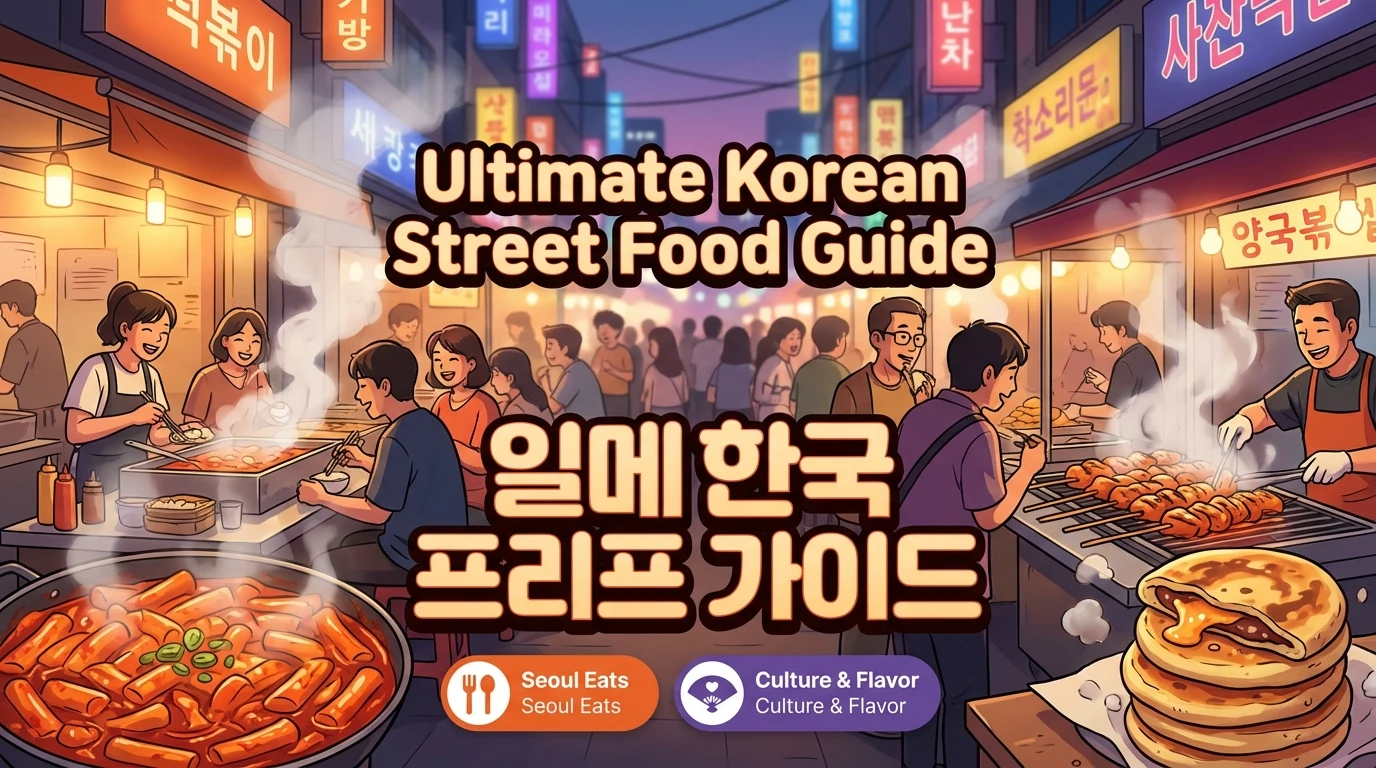
Hotteok (호떡) - sweet pancakes filled with syrup, cinnamon, seeds, or nuts. They are a classic cold-weather street snack.
Eomuk (어묵) - fish cake skewers served with hot broth. If you want the quickest possible way to warm up on a cold street, this is it.
Kalguksu (칼국수) - knife-cut noodle soup. Thick, warming, and especially good after a day outside.
Tteokbokki (떡볶이) - spicy rice cakes are not winter-only, but they hit differently when you are eating them in gloves at a market stall.
Soju (소주) and makgeolli (막걸리) - the familiar Korean drinking pair. Makgeolli, in particular, suits cold and snowy days better than many first-time visitors expect.
Festival food stalls usually add bungeoppang (fish-shaped pastry with sweet filling), grilled snacks, and simple soups. Prices vary by neighborhood and venue, but KRW 1,000 to KRW 2,000 per piece is still common for smaller street snacks.
Sunrise Spots and New Year Travel
If your trip overlaps with New Year travel, either January 1 or Seollal, book earlier than you think you need to.
The January 1 sunrise is a major domestic travel moment in South Korea. East coast spots such as Gangneung, Sokcho, and Jeongdongjin draw large crowds who come specifically to watch the first sunrise of the year. If that appeals to you, book well in advance. If you go last minute, expect crowds, not quiet contemplation.
Seollal matters even more for logistics. In 2026, Seollal itself falls on Tuesday, February 17, with public holidays on Monday, February 16 and Wednesday, February 18. In practice, the travel rush starts over the preceding weekend, so February 14 to 18, 2026 is the period to treat cautiously.
It is not quite true that Korea completely shuts down, but parts of daily life slow noticeably. Government offices close. Many small restaurants and independent businesses reduce hours or shut for several days. Train and bus tickets can sell out well in advance. If you are not traveling for Seollal on purpose, it is usually easier to schedule around it.
Quick Reference: December to February at a Glance
December - early ski season, Seoul Winter Festa and city light displays, festive atmosphere in Seoul, manageable crowds outside Christmas and year-end
January - usually the coldest month, peak winter-festival season, strong ski demand, January 1 sunrise travel surge, book ahead for Gangwon trips
February - some festivals continue into early or mid-February, Seollal causes major domestic travel pressure, and late-month deals can appear once peak dates pass
Official Planning Links
<p>🔗 <a href='https://english.visitkorea.or.kr/svc/sp/HallyuNew/contentsView.do?dataSetId=70&vcontsId=251895'>Korea Tourism Organization winter destinations and festival overview</a></p> <p>🔗 <a href='https://www.narafestival.com/'>Hwacheon Sancheoneo Ice Festival official site</a></p> <p>🔗 <a href='https://festival700.or.kr/'>Pyeongchang Trout Festival official site</a></p> <p>🔗 <a href='https://english.seoul.go.kr/seoul-winter-festa-to-take-place-inviting-people-all-over-the-world-to-fantastical-winter-city/'>Seoul Winter Festa official announcement</a></p> <p>🔗 <a href='https://english.seoul.go.kr/2025-seoul-winter-festa-draws-10-million-visitors-poised-to-grow-as-koreas-premier-winter-festival/'>Seoul Lantern Festival extension notice through January 18, 2026</a></p> <p>🔗 <a href='https://english.seoul.go.kr/2026-seollal-holiday-information/'>2026 Seollal holiday information from Seoul Metropolitan Government</a></p>
Winter in Korea rewards travelers who plan a little and layer properly. The cold is real, but so are the rewards: hotteok on a freezing street corner, festival lights along Cheonggyecheon, and the satisfaction of finding serious winter landscapes a short train or bus ride from Seoul.